1Work in pairs. Look at the photos. What do you think the people are doing?
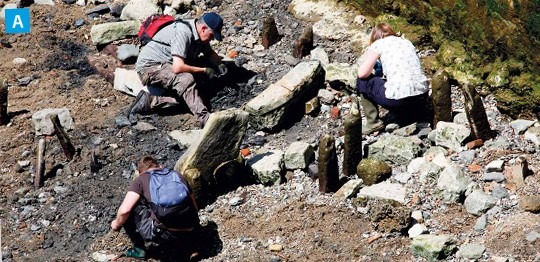
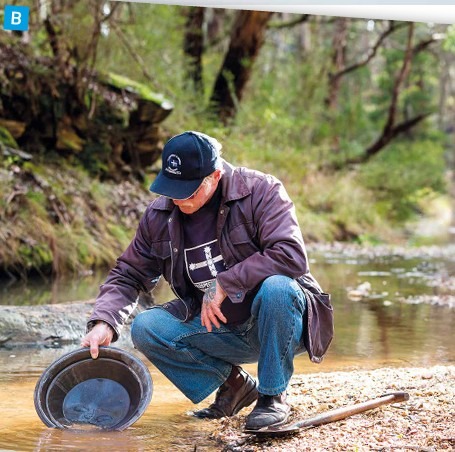
Suggested answers:
Photo A — Looking for lost objects in river mud (mudlarking)
Photo B — Looking for gold in the sand in a river (prospecting)
Photo A — Looking for lost objects in river mud (mudlarking)
Photo B — Looking for gold in the sand in a river (prospecting)
2Work in pairs. Discuss the questions.
1Why do you think people do hobbies like these?
2Would you try any of them? Why/Why not?
3What would you do if you found something important or valuable while doing one of these activities?
3aRead the text. What kinds of things does the text say that mudlarkers find?
🔍 An Unusual Hobby
For thousands of years people have been dumping their rubbish and losing their possessions in the waters of London's most famous waterway, the River Thames. The area has been inhabited since before the Romans came to Britain, and the banks of the river are a treasure trove of objects from the past, making the Thames one of the most interesting archaeological sites in the country. Twice a day the water moves back and leaves large, muddy areas visible on the shores. These often contain fascinating secret treasures for 'mudlarks', people whose hobby is to search the mud for objects from the past.Some of the most interesting things discovered are everyday objects: animal bones and shells give us information about what they ate, while pieces of ceramic dishes tell us how food was cooked and served. Buttons, buckles, combs, rings and thimbles have all been found in the mud, giving historians valuable clues about fashions in centuries gone by. Perhaps the most personal objects found are leather shoes, some still with the imprint of the owner's foot in them.
Other finds tell romantic stories. In the 17th century young men often gave a silver sixpence to their love instead of a ring. These little coins, as well as silver keys and gold rings which were given as love tokens, have been preserved in the mud.
Things mudlarkers find: animal bones and shells, ceramic dishes, buttons, buckles, combs, rings, thimbles, leather shoes, coins, silver keys, gold rings.
3bRead the text again. Answer the questions.
1. When did people start to live in the area around the Thames?
2. Why has the river become an important archaeological site?
3. What type of information have the everyday objects found in the mud given to historians?
4. What objects have been found that are thought to have been gifts of love?
💡 Model answers:
1. Before the Romans came to Britain · 2. People have been dumping rubbish and losing possessions for hundreds of years — it's a treasure trove of objects from the past · 3. Information about what people ate, how they cooked and served food, fashions · 4. Love tokens: silver sixpences, silver keys and gold rings
1. Before the Romans came to Britain · 2. People have been dumping rubbish and losing possessions for hundreds of years — it's a treasure trove of objects from the past · 3. Information about what people ate, how they cooked and served food, fashions · 4. Love tokens: silver sixpences, silver keys and gold rings
4Watch the video from the start to 01:06. Complete the sentences with the words you hear. Use 1–3 words in each gap.
Hi, it's Sally Williams your Roadmap reporter here and today I'm by the famous River Thames. Now, London's
1
has always fascinated me, it was founded two thousand years ago by the Romans, and has been through times of war and peace,
2 .
It has seen some famous Kings and Queens and great writers like William Shakespeare. But
3
to discover a different side of London's history — the story of ordinary people,
4
find it here in the mud under my feet. I've come here today to meet Nicola White who spends much of her time down by the river Thames looking for
5 .
5aMatch the photos A–E with the words in the box. Then watch from 02:13–04:24 to check.
Click a label (left), then click a photo letter (right).
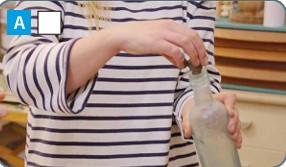 A
A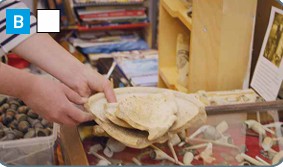 B
B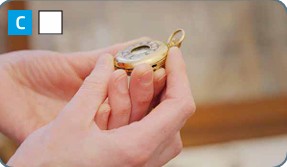 C
C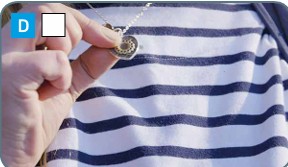 D
D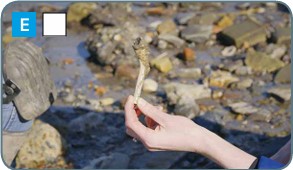 E
EMatched: 0 / 5
6aChoose the correct alternatives to complete the extract from the video. Then watch from 03:09–04:07 to check.
B: Wow that's
/.
Let's keep that, let's wash it and keep it.
B: Let's crack on. So, what's the most / thing you've found Nicola?
A: Well I found this Georgian heart necklace which I absolutely / and which I wear every day. But I've got lots of other really / things in my studio. / you like to come and have a look?
B: Oh, / love to. Yeah let's go! So, Nicola these are all your treasures, they're amazing! What's the oldest thing you've got?
B: Gosh, that is /. And what's probably the most / thing you've got?
B: Let's crack on. So, what's the most / thing you've found Nicola?
A: Well I found this Georgian heart necklace which I absolutely / and which I wear every day. But I've got lots of other really / things in my studio. / you like to come and have a look?
B: Oh, / love to. Yeah let's go! So, Nicola these are all your treasures, they're amazing! What's the oldest thing you've got?
B: Gosh, that is /. And what's probably the most / thing you've got?
7Watch the whole video again. Answer the questions.
1. What is a mudlark?
2. When is the best time to find things?
3. What do they find first?
4. How old is the pipe?
5. What does Nicola say is the most exciting thing she's found?
6. What is the oldest thing Nicola has?
7. What does Nicola find most of?
8. How does Nicola say it feels when she finds things?
💡 Model answers:
1. A mudlark searches for pieces of history along the banks of the Thames · 2. At low-tide · 3. An old shoe · 4. Over 250 years · 5. A Georgian heart necklace · 6. A Roman pot · 7. Bottle stoppers · 8. It feels special
1. A mudlark searches for pieces of history along the banks of the Thames · 2. At low-tide · 3. An old shoe · 4. Over 250 years · 5. A Georgian heart necklace · 6. A Roman pot · 7. Bottle stoppers · 8. It feels special
8Work in pairs. Discuss the questions.
1Would you like to try mudlarking? Why/Why not?
2Where are some other places that you might find old things?
3Have you ever lost anything precious? Where did you lose it? Did you get it back?
9Work in pairs. Think about things you have which are very special to you. Tell your partner why these objects are special to you.
•Something that has been in your family for a long time
•Something that reminds you of a special place
•Something a special person gave you
A: I have a necklace which is special to me.
B: Where did you get it from?
A: My great grandmother gave it to me when I was twelve.
B: Where did you get it from?
A: My great grandmother gave it to me when I was twelve.